Factory Augmented Reality application.
This Augmented Reality(AR) project provided an exciting opportunity to work closely with a local company. The main focus was on improving usability and user experience, transforming the app into a practical, user-friendly solution that truly meets users' needs.
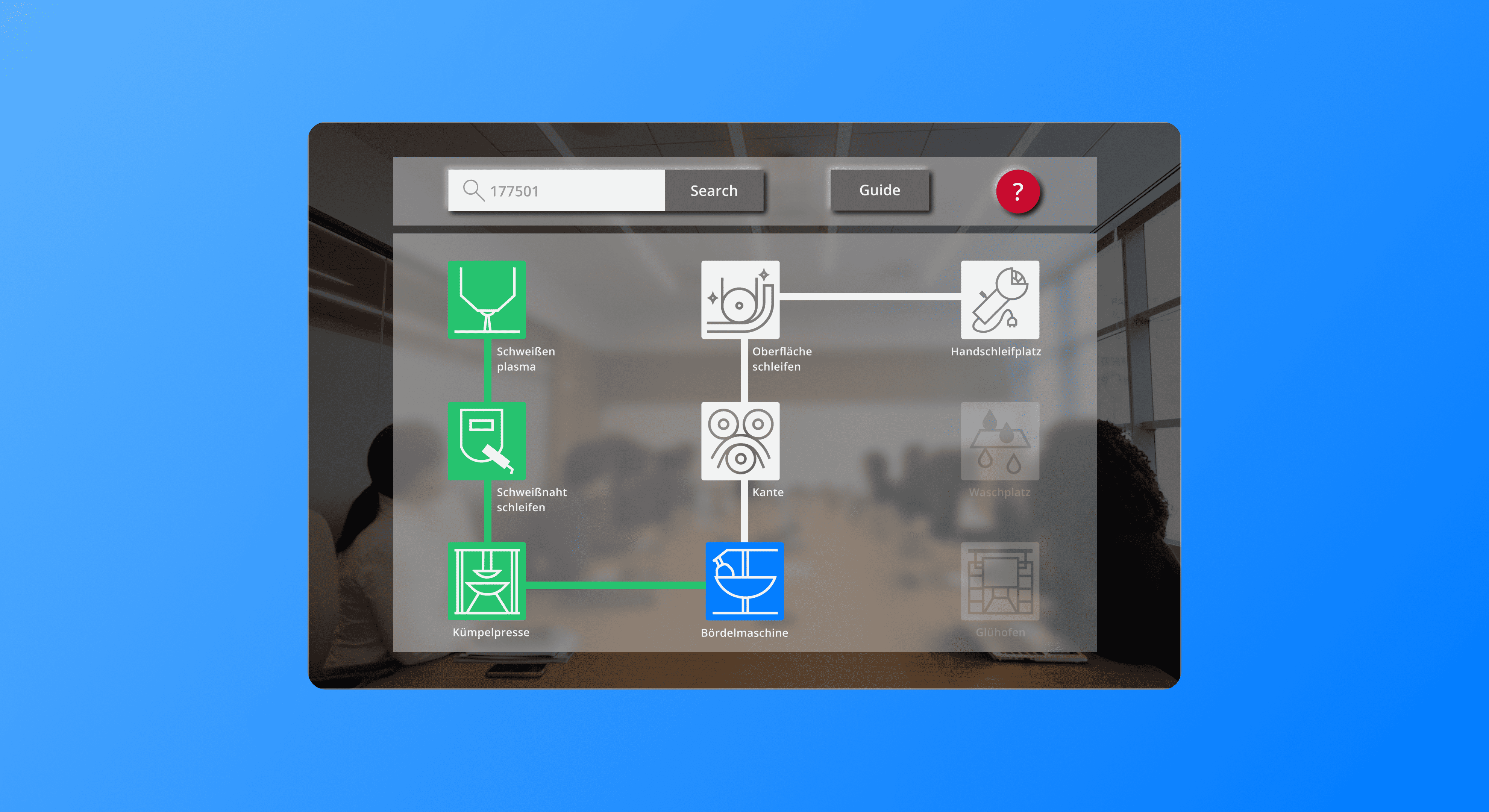
Executive Summary
What?
Improving usability and user experience for a factory Augmented reality app.
Who?
I, work alongside Daniela Tenorio Pizano as a team, collaborating at every step of the process to create a user-friendly interface.
Why?
Users faced significant challenges navigation the augmented reality application due to lack of proper instructions and a poorly designed user interface. Each interaction required assistance to help them understanding about the product flow and achieve their goals.
Impact
- Improved usability and making the app easier to navigate
- Achieved 95% task completion rate without any assistance
- Enhanced effectiveness through AR design principles
- Delivered a polished, user-friendly interface
Preliminary Study
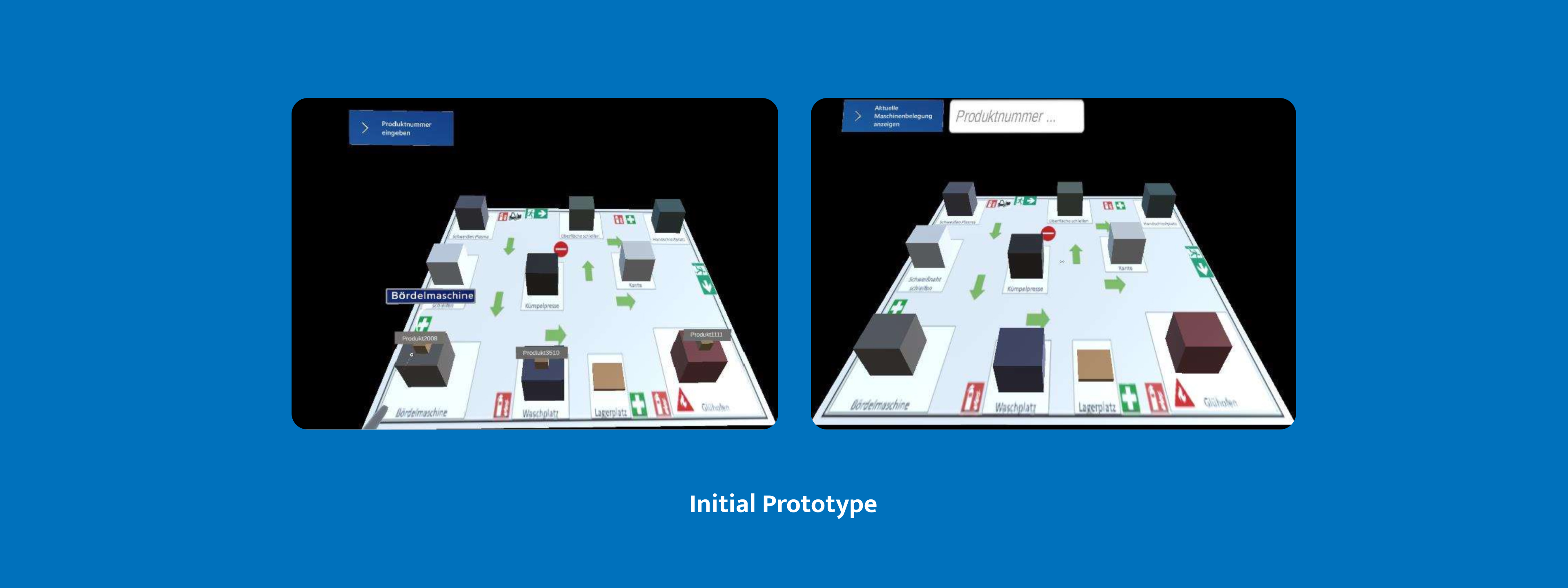
A critical first step in this project was to thoroughly analyze the previously developed application and gain familiarity with the existing prototype. This involved addressing key questions such as: Who will use this application? What were the user requirements? What was the primary purpose of this product? This study was essential to identify areas for improvement and guide the redesign process effectively. The image below illustrates the previously developed factory production line as viewed through Microsoft HoloLens 2.
- Usability Testing – 1
- Research
- Ideation
- Prototype
- Usability Testing – 2
Usability Testing – 1
To identify the issues faced by the participants with the existing prototype, we conducted usability testing with seven participants. It helped us understand their perceptions of the application's usability and assess whether it aligned with the user requirements established during the initial planning phase.
The findings of this usability testing are:
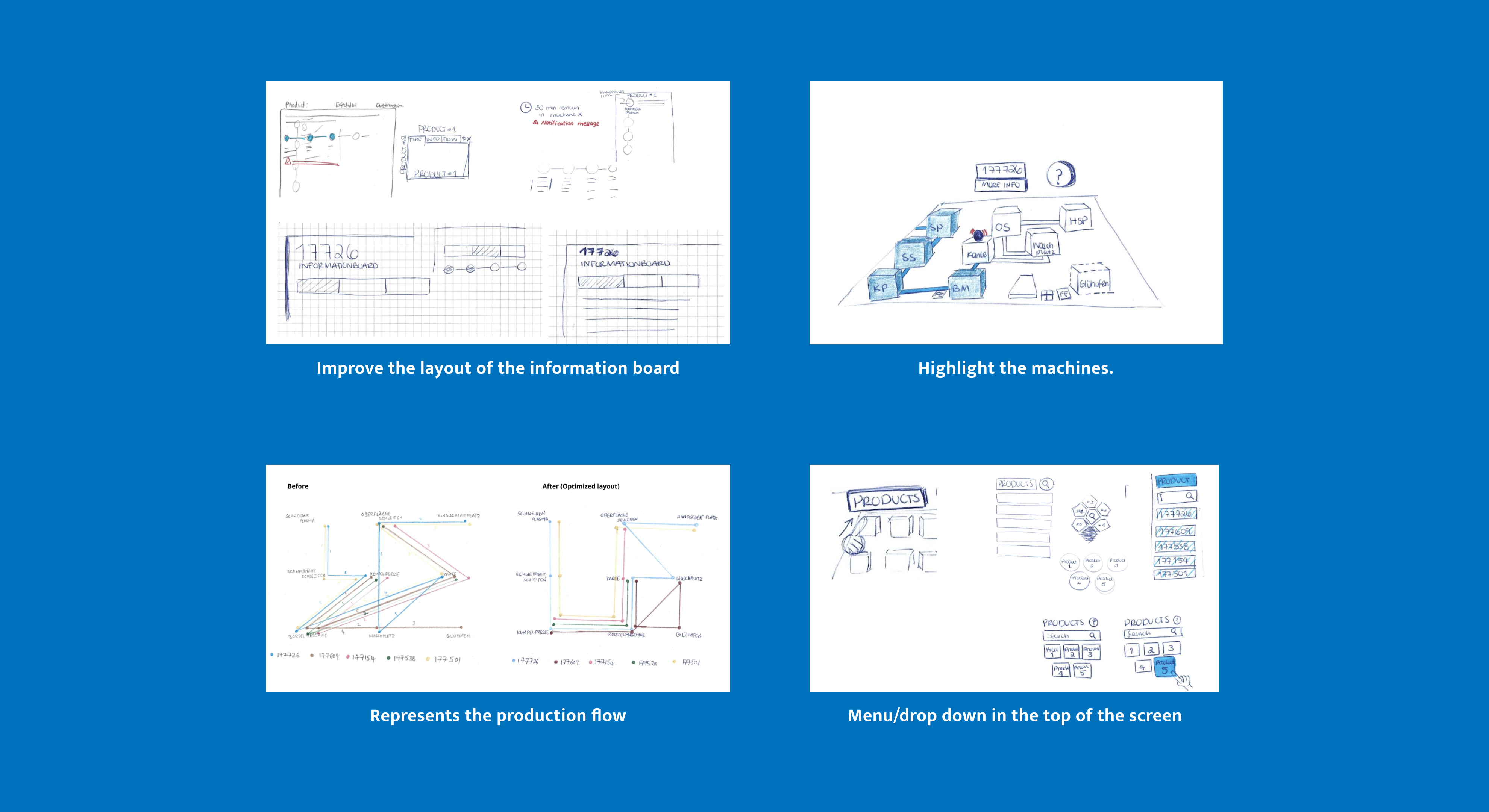
- Highlight (make stand out) the machines
- Represent a clear straight line that represents the production flow
- Improve the layout of the information board
- Menu/drop down in the top of the screen
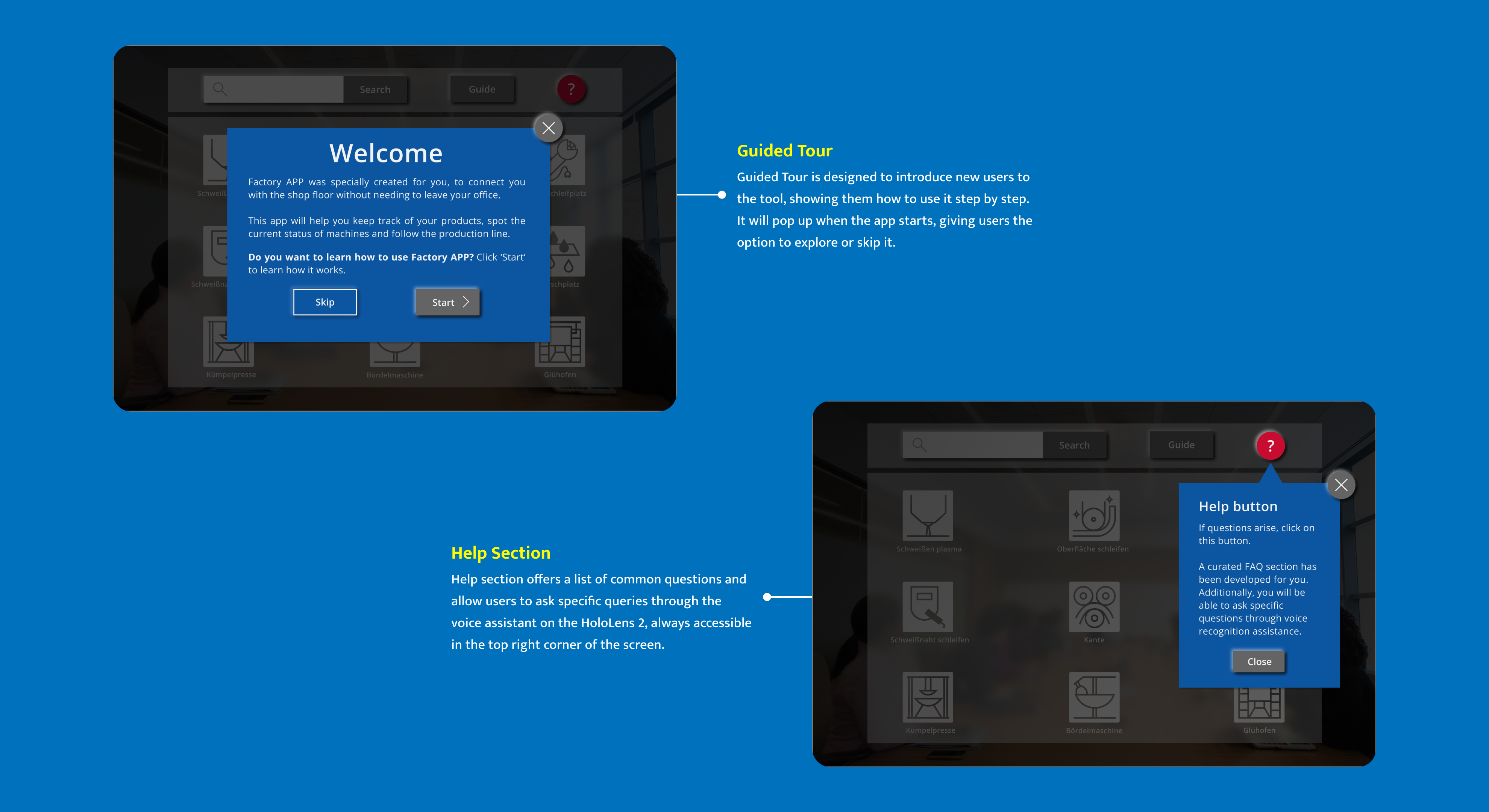
- Implement a 'Help' section
- Implement a 'Guided tour'
- Improve the way machines are represented
- New interaction: click the machine
Research
we researched key design principles specific to AR, considering the significant differences between 2D and 3D applications. Below principles were critical in reshaping the AR experience and addressing user needs effectively.
- Effective use of the spatial environment
- Prioritizing user safety and comfort
- Keep it simple
- Use cues to help users
- When possible, use physical interaction
- Use sound to enhance user experience
- Provide feedback and consistency
Ideation
The goal was to generate solutions based on research findings and user insights. My colleague, Daniela Tenorio Pizano, and I did a brainstorming session to design AR-based design concepts to enhance usability and user experience.
Below are a few design concepts generated during this ideation phase:
Prototype
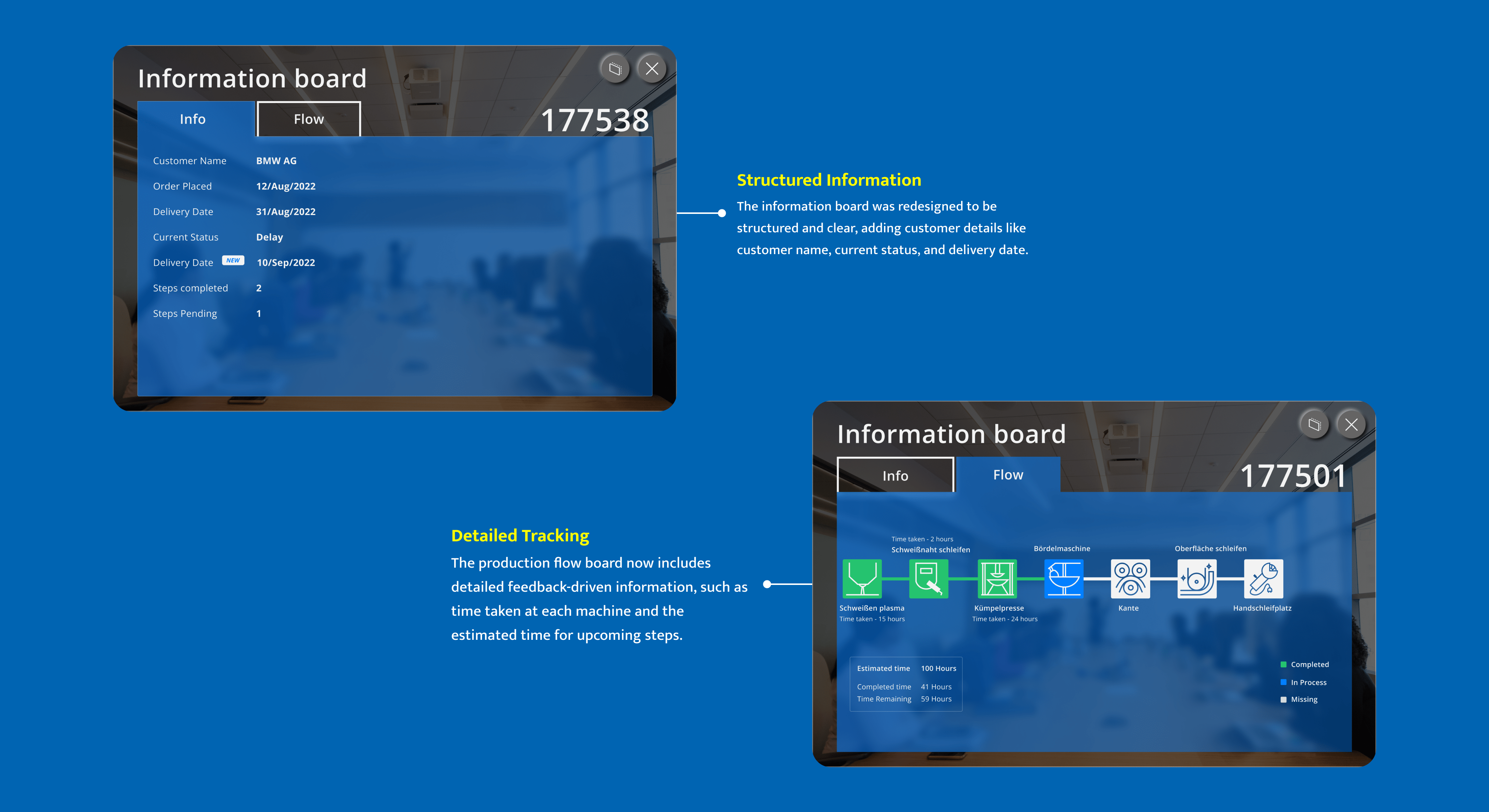
The ideas brainstormed during the ideation phase were translated into high-fidelity wireframes, ensuring the application of AR design principles. These wireframes served as a detailed blueprint for the prototype in the 2D version.

Usability Testing - 2
A second usability testing session was conducted with Five employees from the initial evaluation. The results showed a 30% increase in task complpetion rate from 65% to 95%, with participants highlighting that it was easy to navigate through all the functions independently, without requiring assistance.
Testing in AR Software
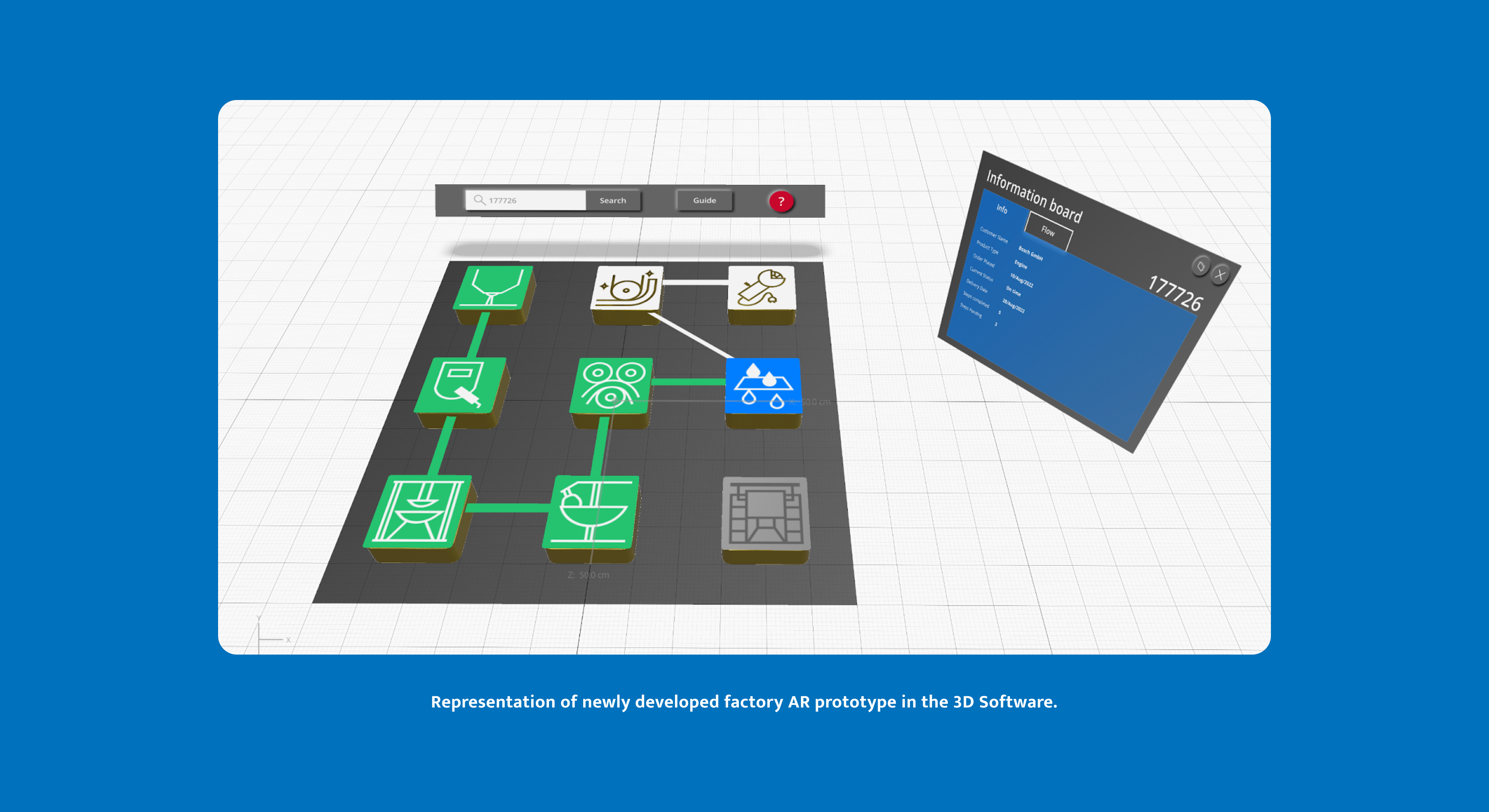
After exploring the documentation and experimenting with Adobe Aero, I successfully converted a screen from the 2D prototype into a 3D environment and tested it.
Key Takeaways
- Engaging directly with users helped us to create effective solutions.
- Learned the importance of 3D space design principles.
- Iterative process is crucial in refinement and improving the application.
- Collaboration is key in turning research into practical, user-friendly solutions.
Want More