Reclaiming Digital Balance.
Did you know that 5.75 billion people, or 70% of the world's population, use smartphones?
The widespread use of smartphones has transformed communication, entertainment, and access to information. On the other hand, there are increasing concerns about how excessive dependence on these devices is negatively affecting our well-being.
Problem
This thesis project addresses the consequences of excessive smartphone usage and its impact on personal well-being? What are the strategies to help individuals recognize and reduce excessive smartphone usage for a healthier balance?
Solution
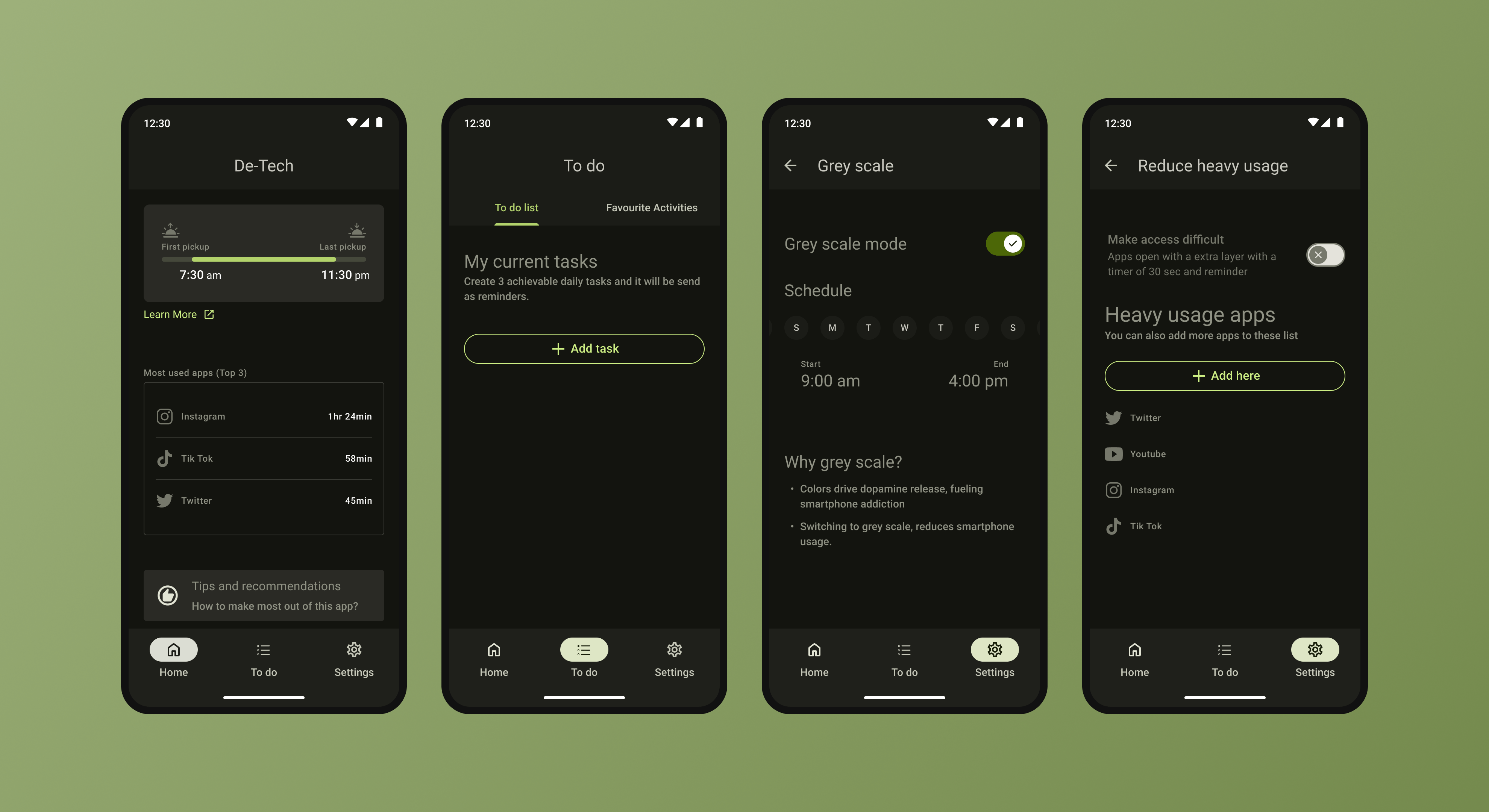
As part of this project, I created an app prototype called 'De-Tech', designed to encourage smartphone users to use their devices mindfully, promote healthier usage habits, and reduce over-dependence.
Skeptical about how an app helps in reduce smartphone usage? Let's dive in and see how it works.
Impact
- Increased User Awareness and Mindfulness
- Enhanced Customization and Personalization
- Promoted healthy decision making
- Ensures potential long-term behaviour change
Methodology
For this study, I employed the Participatory Design Methodology to ensure that the solutions are practical, useful, and tailored to users' individual needs and preferences. This methodology was chosen to effectively answer the following research questions:
RQ1: What are the problems users are facing with excessive smartphone usage?
RQ2: Do smartphone users identify when they're spending excessively?
RQ3: How do users consider reducing phone usage on their own?
RQ4: How to encourage users to shift their focus and engage in other activities?
- Survey
- Diary Study
- Focus Group
- Designing
- Usability Testing
Survey
The survey collects data on users' smartphone usage, including time spent, primary activities, and strategies used to reduce excessive use. In total of thirty two participants were participated.
78%
Spend > 3hrs
53.1%
Considers Usage was Excessive
50%
Primarily use for Social Media
90%
Wants to Reduce Usage
Diary Study
The main aim of this diary study was to understand how people use their smartphones daily and to learn their day-to-day behaviours and interactions in their natural context. Seventeen users were participated in this study for a 10-day period.
The quantitative results are summarized as shown below:

The qualitative results are summarized as shown below:
RQ1: what are the problems that users are facing with excessive smartphone usage?
- Lack of sleep
- Fear of Missing out
- Lack of concentration and focus
- No Productivity
- Procrastination/Not able to finish things/works in time
- Physical discomfort
- Experiencing negative emotions
RQ2: Do smartphone users identify when they're spending excessively?
- When feeling Tired
- When feeling Bored
- During their sparetime
- While using social media
- During early mornings
- Before bedtime
RQ3: How do users consider reducing phone usage on their own?
- Set Timers
- Turn off Mobile
- Keeping out of sight
- Turn off Notifications
- Delete Apps
- Focus on daily goals
The challenges faced by users while implementing these strategies are:
- Boredom
- Constant urge
- Lack of Commitment
- Fear of missing out
Focus Group
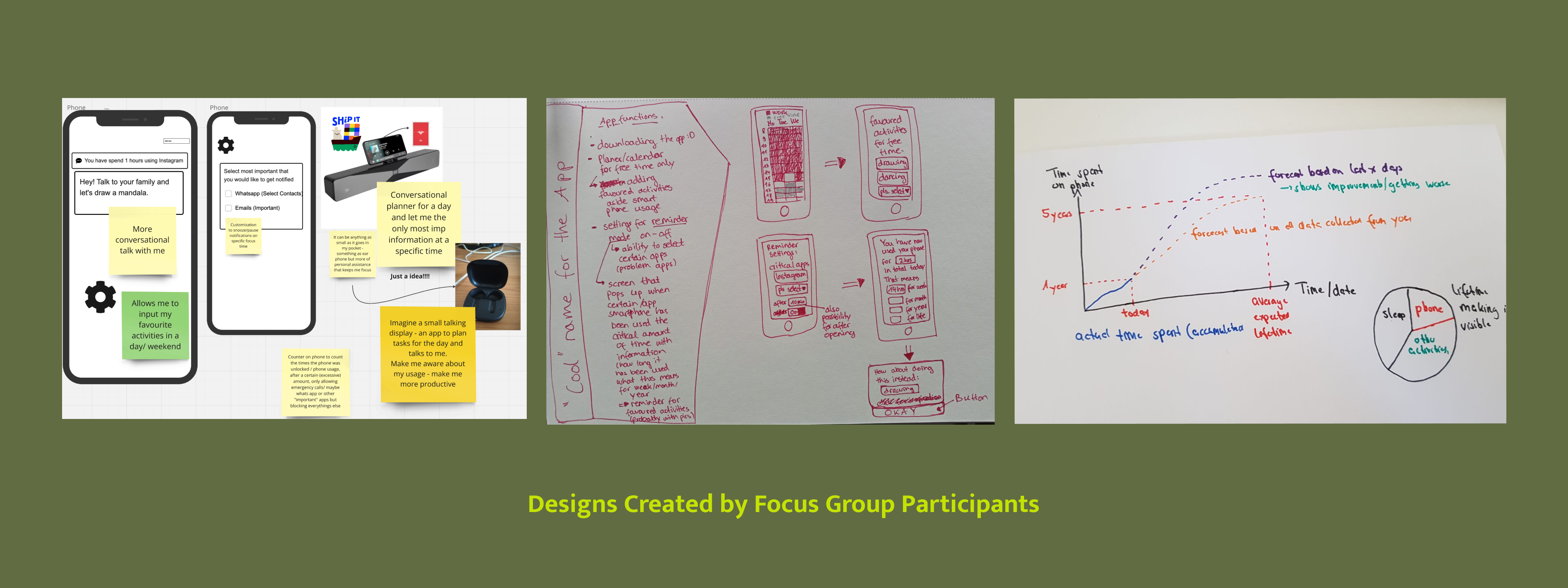
The focus group aimed to gather in-depth perspectives of their daily smartphone usage through group interactions. Additionally, to present diary study results and brainstorming of potential solutions. It was conducted with 11 participants.
High-fidelity Wireframes
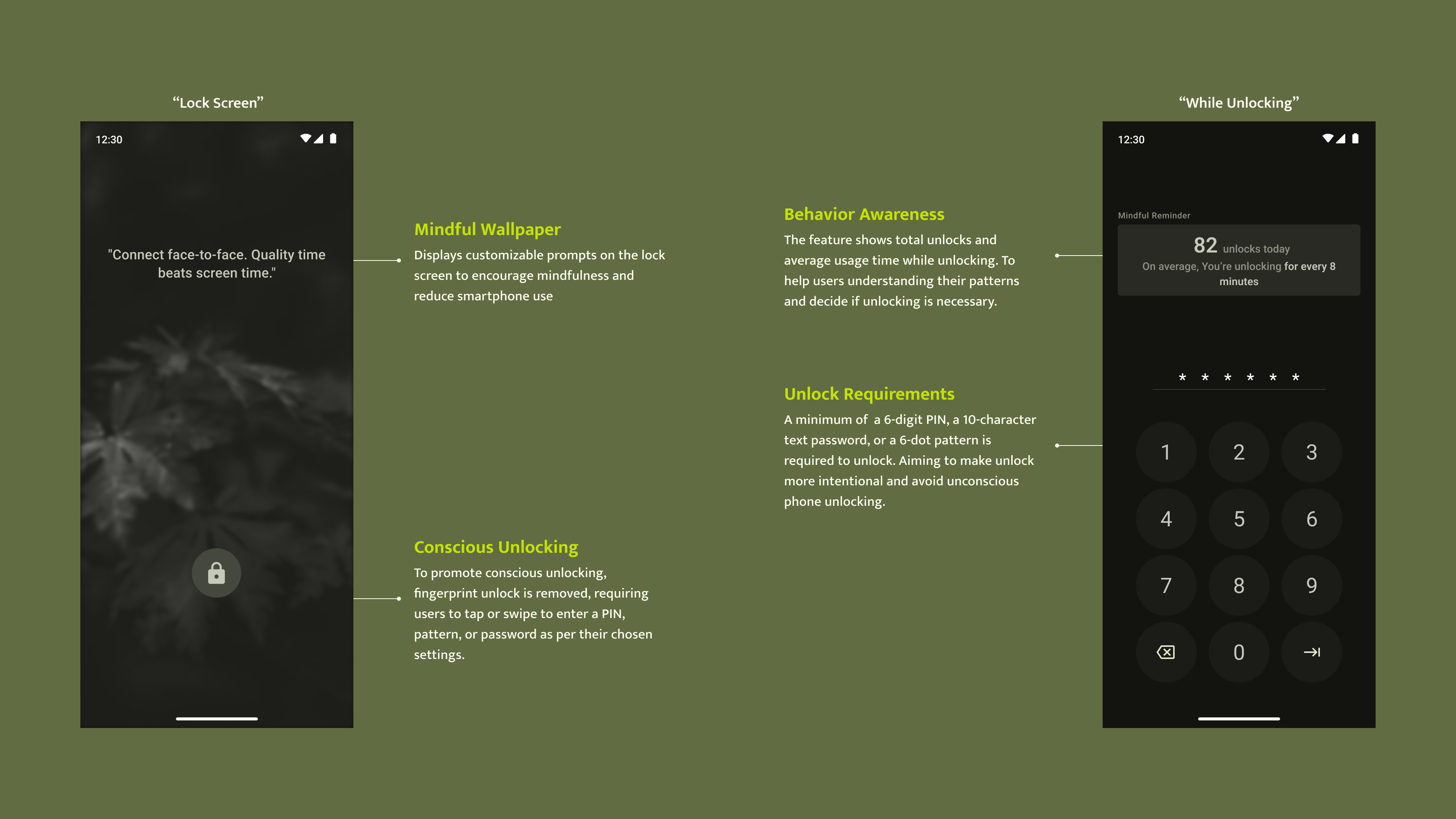
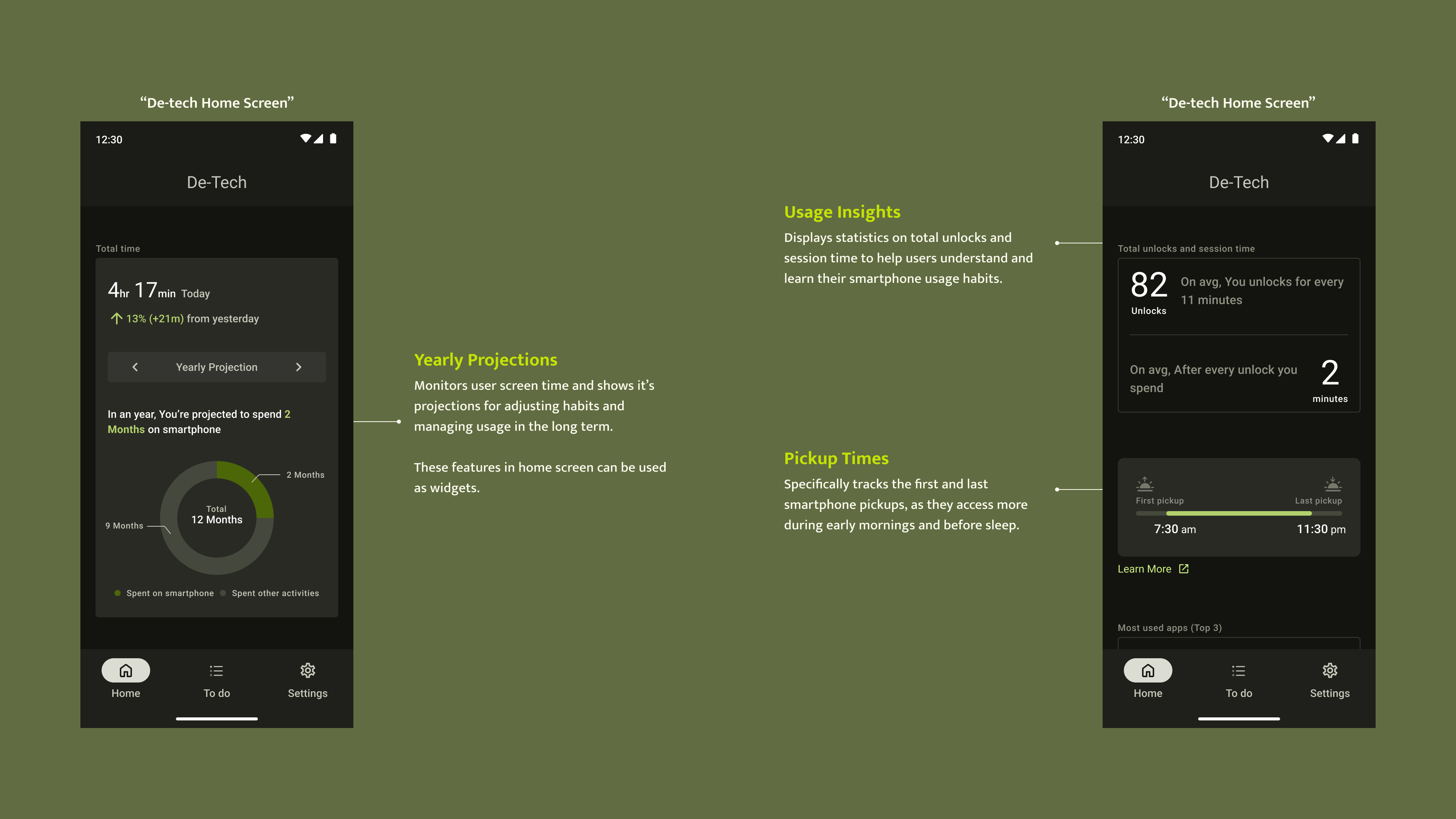
The next step was creating sketches using ideas from the focus group. These concepts aimed to address excessive smartphone usage efficiently. After finalizing the sketches, an initial evaluation was conducted to gather feedback on the features, leading to the creation of high-fidelity wireframes.
The images below illustrate different designs along with detailed explanations of their features:

Usability Testing
Usability testing was conducted as the final step to identify issues and gather user feedback on their experiences while interacting with the prototype. Study participants shared their experiences while interacting with the prototype's features.
- Track daily goals
- Reminds Constantly
- Clean & Minimalistic
- Creating awareness
- Making more conscious
- Promotes mindful usage
- Delayed accessing the app
- Encourage to finish daily goals
- Promotes healthy decision making
What I learned?
- Excessive smartphone use harms emotional well-being, productivity, and sleep.
- Users are often unaware of their phone usage but want to reduce it.
- Participatory design is crucial for creating user-centered, practical solutions.
- Customization and tracking features promote sustainable behavior change.
- Usability testing ensures the app is intuitive and meets user needs.
Want More